Between Boss Fights and Breakthroughs: How Discord Servers Became Unlikely Safe Spaces
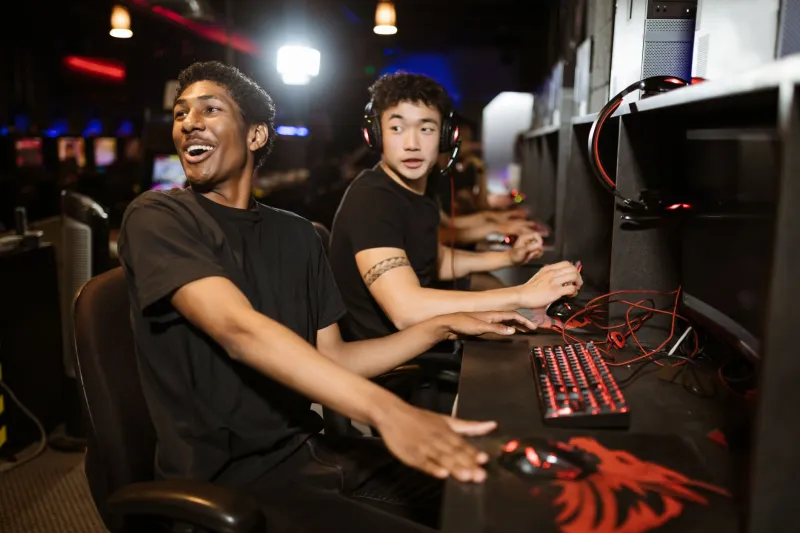
Nobody logs into a Discord server expecting to feel better about their life. You're there for the game — to coordinate a raid, argue about build loadouts, or just hang out while grinding through a dungeon you've cleared a hundred times. And yet, somewhere between the banter and the background noise of a shared quest, something else starts happening. People talk. Really talk.
Across gaming communities big and small, casual players and hardcore enthusiasts are discovering that the spaces they built around entertainment have quietly become something more — a kind of informal support network that nobody planned for but almost everyone seems to need.
Why Games Make It Easier to Open Up
Here's the thing about talking to someone while you're both staring at a screen: the pressure drops. You're not sitting across a table making eye contact. There's no awkward silence to fill, because the game fills it for you. Psychologists actually have a name for this dynamic — they call it "side-by-side" interaction, and research consistently shows that people disclose more personal information when they're engaged in a shared activity rather than a face-to-face conversation.
Think about how many meaningful talks happen in cars, on walks, or during long drives. The activity gives your nervous system something to do while your brain processes the harder stuff. Gaming works the same way, only with better sound design.
Dr. Rachel Kowert, a research psychologist who has spent years studying the intersection of gaming and mental health, has pointed out that online games create what she describes as a "context of low stakes" — an environment where you can test the waters of vulnerability without the full social weight of a direct conversation. If it gets too heavy, you can always blame lag and change the subject.
The Accidental Support Network
Ask anyone who's been part of a long-running gaming community and they'll have a story. The guild member who mentioned offhand one night that they were going through a divorce and found themselves flooded with DMs. The streamer who casually admitted they were struggling with anxiety and watched their chat transform from meme machine to genuine support system. The Discord server for a cozy farming game that evolved a dedicated channel where members check in on each other daily — no gaming required.
These aren't flukes. They're the natural result of what happens when people spend real time together, even virtually. Shared experience builds trust. Trust opens doors. And gaming communities rack up shared experiences fast — victories, defeats, frustrating bugs, late-night sessions, inside jokes that go back years.
One player from a mid-sized MMO guild in Ohio described it this way: "I've known some of these people for six years. We've never met in person, but they knew I was depressed before my own family did. It just came out one night after a wipe. Someone asked if I was okay and I just... started talking."
That kind of organic disclosure — unplanned, unforced, happening in the margins of something else entirely — is actually more common in gaming spaces than most people realize.
The Psychology Behind the Party Chat
There's more going on here than just proximity and shared activity. Gaming communities, particularly those built around ongoing multiplayer experiences, create something social scientists call "weak ties with depth" — relationships that don't carry the obligations of close friendships but still develop genuine emotional resonance over time.
You're not someone's coworker, family member, or romantic partner. There's no real-world consequence if you say something vulnerable. And yet, because you've fought through content together, stayed up late solving problems as a team, and watched each other grow as players, the connection is real. That combination — authentic relationship without high social stakes — is genuinely rare in adult life, and it makes honest conversation easier.
Add to that the anonymity factor. Even in communities where people use their real names, there's a layer of separation from your "real world" identity. Your guild knows you as the person who clutched that last-second win, not as the person who bombed a presentation at work or cried in their car last Tuesday. You get to show up as a version of yourself that feels capable and connected — and sometimes, from that place of strength, it's easier to admit where you're struggling.
It's Not a Replacement — But It's Not Nothing Either
Let's be clear: a Discord server is not a therapist's office. Gaming communities are not trained mental health professionals, and nobody should treat them as a substitute for actual clinical support when that's what's needed. Crisis situations require crisis resources — and platforms like the 988 Suicide and Crisis Lifeline exist precisely because some conversations need a trained human on the other end.
But there's a massive middle ground between clinical crisis and total wellness, and that's where gaming communities are quietly doing something valuable. They're normalizing the act of checking in. They're creating spaces where saying "I've been having a rough week" doesn't derail everything — it just becomes part of the conversation. That normalization matters more than people give it credit for.
Mental health professionals increasingly recognize the value of community-based support as a complement to formal care. Having people who notice when you've gone quiet, who send a "hey, you good?" message after you miss raid night, who celebrate small wins in your life the same way they celebrate in-game achievements — that kind of consistent, low-pressure attention has genuine protective value.
What Gaming Communities Are Getting Right
The best gaming communities aren't accidentally therapeutic because of some magical property of video games. They work because the people in them are paying attention to each other. They've built cultures — sometimes explicitly, sometimes just by example — where it's okay to be a human being instead of just a player.
Moderation plays a role. Servers that actively cultivate kindness and shut down toxicity tend to be the ones where people feel safe enough to be real. So do communities that have been around long enough to develop genuine history and trust. Size matters too — intimate servers of a few dozen people often create deeper bonds than massive public communities.
And increasingly, community leaders are leaning into this dynamic intentionally. Server admins are creating dedicated channels for non-gaming conversation. Streamers are building communities with explicit mental health check-in traditions. Gaming organizations are partnering with mental health nonprofits to train moderators in basic psychological first aid.
The Bigger Picture
America has a loneliness problem. Surveys consistently show that adults — especially men, who make up a significant chunk of the gaming population — struggle to maintain meaningful social connections and feel comfortable expressing vulnerability. Traditional avenues for community have been shrinking for decades. Bowling leagues, church groups, neighborhood associations — the old infrastructure of casual belonging is thinner than it used to be.
Gaming communities aren't filling that gap by design. But they're filling it. Millions of Americans have found, in the middle of something they do purely for fun, a group of people who genuinely know them. Who notice when something's off. Who show up — even if "showing up" means dropping into a voice channel at 11pm to sit with someone who's having a hard night.
That's not nothing. That's actually kind of everything.
So the next time someone rolls their eyes at you for spending time in your gaming community, you can tell them you're doing something that's genuinely good for your mental health. Because the research — and a whole lot of lived experience — backs you up.