The Headset Honesty Hour: Why Your Online Gaming Crew Calls You Out Better Than Your Closest Friends
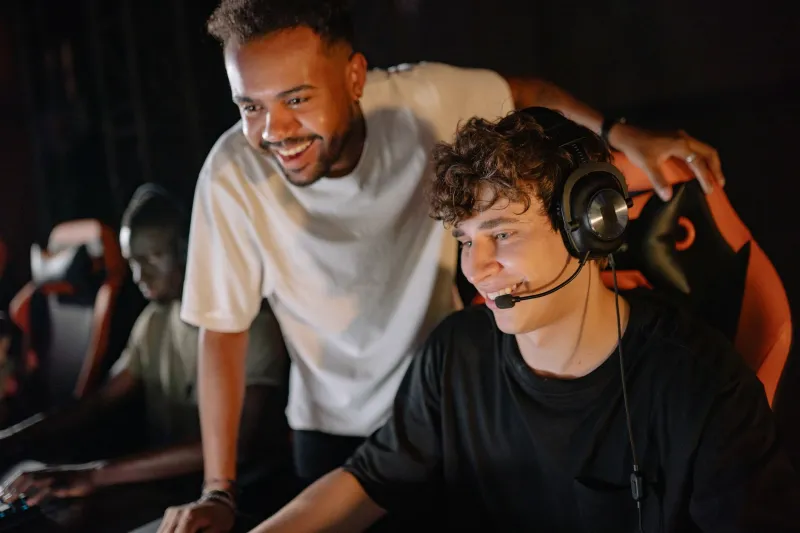
It usually starts mid-match. You're venting about your boss, your ex, or some decision you made that you're already second-guessing. Nobody stops the game. Nobody makes it weird. And then, out of nowhere, someone on your team says the thing that your closest coworker, your college roommate, or even your sibling has been dancing around for months.
Straight. To the point. No cushioning.
And somehow — coming through a headset from someone you've maybe never seen in person — it actually lands.
This isn't a fluke. It's not just your squad. It's happening in gaming circles across the country, and it says something genuinely fascinating about how we connect, communicate, and grow when the pressure of face-to-face interaction gets taken off the table.
The Screen Between You Is Actually the Point
Here's the counterintuitive thing: the distance that people assume makes online friendships shallower is often what makes them more honest.
When you're sitting across from someone — a parent, a best friend, a therapist even — there's a whole performance layer involved. You're reading their facial expressions. You're adjusting your tone based on whether they look uncomfortable. You're managing the relationship while having the conversation. That's a lot of cognitive load, and it often means the real stuff gets softened or skipped entirely.
In a gaming session? That layer mostly disappears. You're both staring at a screen. Your hands are busy. The conversation happens in the margins of something else entirely, which means neither person is in "serious talk" mode. And paradoxically, that's exactly when serious talk gets through.
Psychologists have a term for this kind of interaction — side-by-side communication — and research has long suggested it's often more effective than face-to-face conversations for getting people to open up. Think about how many important conversations happen in cars. Gaming is basically the digital version of that long drive where everything comes out.
Why Your Squad Doesn't Have a Stake in Protecting Your Ego
Your coworkers have to see you Monday morning. Your family members have to sit next to you at Thanksgiving. Your IRL friends are embedded in the same social web you are — which means when they give you feedback, they're also managing the fallout of that feedback within a shared community.
Your gaming crew? Not so much.
That doesn't mean they don't care about you. It means they don't have a social incentive to sugarcoat things. If they tell you that you're clearly still hung up on your ex or that your reason for turning down that job offer sounds more like fear than logic — and you get defensive — the stakes are lower. The relationship isn't tangled up in your mutual friend group or your shared workplace or your family dynamics.
That freedom creates a kind of radical honesty that's genuinely rare. They're not trying to manage you. They're just... telling you what they see. And because you know they don't have skin in the game of your ego, you're more likely to actually hear it.
The Low-Pressure Environment Is Doing Heavy Lifting
There's a reason the best conversations often happen when you're not trying to have them. Scheduling a "we need to talk" sit-down with someone immediately raises everyone's defenses. You walk in braced for something. You're already rehearsing your responses before the other person finishes their first sentence.
A gaming session has none of that energy. You logged on to play. Whatever gets said is almost incidental to the main activity — which means your walls are down. You're in a relaxed, slightly dopamine-buzzed state. You're not performing vulnerability; you're just... talking while you play.
And in that space, it becomes surprisingly easy to say things you'd never bring up at brunch. "I think I'm actually really unhappy at work." "I don't know if I'm making the right call with this relationship." "I've been feeling kind of lost lately." These confessions come out sideways, in the middle of a match, and somehow that makes them easier to both say and receive.
When the Call-Out Hits Different
Ask around in almost any gaming community and you'll find versions of the same story: someone who got genuinely life-changing feedback from a person they'd never met in person. A teammate who told them, bluntly, that the way they talked about their relationship sounded toxic. A squadmate who pointed out that they'd been making excuses for the same situation for six months straight. A party member who just said, "That doesn't sound like something you actually want — that sounds like something you think you should want."
Those moments stick. Not because gaming friends are wiser than everyone else in your life, but because the context made it possible to both say and receive something real.
There's also something to be said for the fact that gaming squads often develop a specific kind of shorthand and trust. You've been through the grind together. You've seen each other tilt, recover, adapt, and push through. That shared experience — even if it's entirely digital — builds a foundation of credibility. When someone who's watched you play for hundreds of hours tells you something about how you operate, it doesn't feel random. It feels earned.
It Goes Both Ways
The other thing worth naming: you're probably playing this role for someone else in your squad too, even if you haven't thought about it that way.
The person you casually told "hey, that doesn't sound right" to six months ago? They might still be thinking about it. The offhand observation you made about someone's situation while you were both grinding through a session? It might have been the nudge they needed to actually make a change.
Gaming squads are, without anyone really signing up for it, informal support networks. Not therapy. Not life coaching. Just people who've spent enough time in the same virtual space to actually know each other — and who, freed from the social weight of in-person relationships, can sometimes say the thing that needs to be said.
Play On
None of this means you should treat every gaming session like a group therapy drop-in. The magic is specifically that it isn't that — it's just what happens naturally when people spend real time together, even digitally, and let their guards down.
But the next time someone in your party says something that catches you off guard — something honest, something uncomfortably accurate — don't brush it off just because it came through a headset instead of across a coffee table.
Sometimes the people who see you most clearly are the ones watching your back from the other side of a screen.