When Chasing Clout Kills the Fun: The Hidden Cost of Turning Your Gaming Passion Into a Paycheck
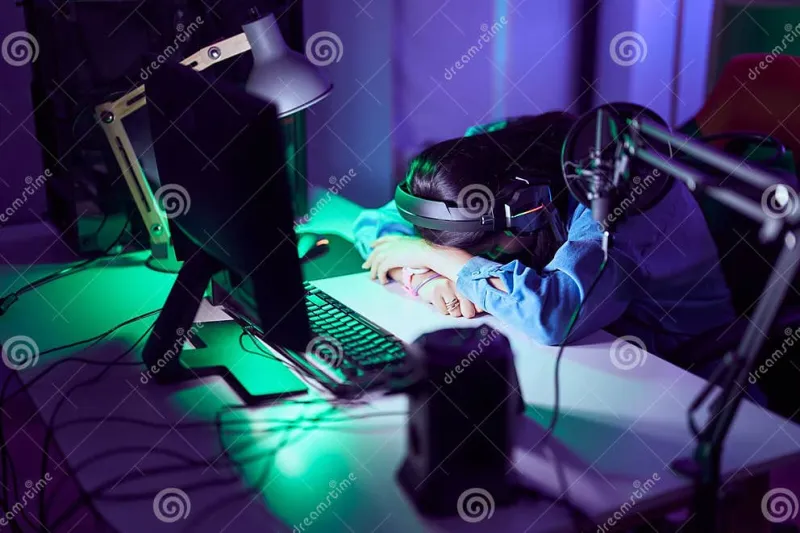
Photo: gamer streamer burnout stressed at computer with ring light setup, via thumbs.dreamstime.com
There's a version of this story that gets told a lot. You're gaming late on a Tuesday, laughing with your friends in a party chat, absolutely crushing it — and someone says, "Dude, you should stream this." A few months later, you've got a decent rig, a ring light, and a growing subscriber count. Life is good.
Then, somewhere between the brand deal emails and the analytics dashboards, you realize you haven't actually enjoyed a game in weeks.
This is the part of the streamer success story nobody puts in the highlight reel.
The Moment the Controller Stops Feeling Like Yours
Ask anyone who's made the leap from casual player to content creator, and most of them can pinpoint the exact moment things shifted. It's not dramatic. There's no single bad day. It's more like a slow leak — one where the pressure to perform gradually replaces the instinct to just play.
When you're gaming for yourself, a bad session is just a bad session. You quit, grab a snack, come back tomorrow. When you're gaming for an audience — even a small one — a bad session is a failed piece of content. Suddenly every death, every disconnect, every moment where you're not "on" feels like a liability.
The psychological term for what's happening here is called the overjustification effect: when you start receiving external rewards for something you used to do purely for internal satisfaction, your brain quietly reassigns the reason you're doing it. The activity stops feeling like play and starts feeling like work. And once that switch flips, it's really hard to unflip.
The Algorithm Is Not Your Friend
Here's something the YouTube success videos leave out: the algorithm doesn't care about your wellbeing. It cares about consistency, watch time, and engagement. And the dirty secret of content creation is that the platform's needs and your mental health needs are almost perfectly misaligned.
Consistency means streaming on a schedule — even when you're exhausted, sick, or just not feeling it. Watch time means longer sessions, more content, less downtime. Engagement means reacting to every comment, every donation, every raid, in real time, while also trying to actually play a game competently.
For a lot of creators, this adds up to a workload that would be considered genuinely brutal in any other industry. Except in this one, the cultural narrative says you should be grateful for it because you're "doing what you love."
That framing is doing a lot of heavy lifting — and it's worth pushing back on.
Creators Who Chose Their Joy Over the Grind
Talk to enough people in the streaming space and you'll start hearing a version of the same story over and over. A creator builds an audience, lands sponsorships, gets a taste of real income — and then quietly steps back, or walks away entirely, because the cost to their relationship with gaming wasn't worth it.
One mid-tier Twitch streamer who spent three years building a community around RPGs described it this way: she'd started streaming because she genuinely loved the storytelling in games. By year two, she was playing whatever was trending because that's what the algorithm rewarded. By year three, she hadn't finished a game she actually cared about in months. She took a two-week break that turned into six months, and she says it was the best decision she ever made.
She still plays. She still shares clips sometimes. But she doesn't stream on a schedule anymore, and she doesn't take sponsorships. She got her hobby back.
That's not a failure story. That's actually a pretty healthy ending.
The Pressure Nobody Talks About
There's also a social dimension to this that's easy to underestimate. When your audience grows, so does the sense of obligation to them. Viewers become regulars. Regulars become something closer to a community. And communities have expectations.
Missing a stream isn't just a personal choice anymore — it's something you feel like you owe people an explanation for. Taking a break feels like letting people down. Quitting feels like abandoning them.
This is one of the most emotionally complicated parts of the whole equation, because the connection with your community is often the best part of streaming. But it can also become a kind of invisible leash that makes it harder to prioritize your own needs.
Burnout in the creator space is well-documented at this point. Major streamers have talked about it publicly. The conversation is more normalized than it used to be. But normalization doesn't automatically make it easier to navigate when you're the one in it.
So Should You Even Try?
None of this is meant to be a hard no. Plenty of people have built sustainable, fulfilling careers in content creation. And there's nothing wrong with wanting to share your gaming life with an audience — that impulse comes from a genuinely good place.
But if you're thinking about making the jump, it's worth going in with clear eyes. A few things worth sitting with before you hit monetize:
Separate the income goal from the hobby. If streaming becomes your job, treat it like one — with boundaries, off-hours, and a genuine understanding that your personal gaming time is separate and protected. Don't let the job eat the hobby that inspired it.
Build slow on purpose. The pressure to grow fast is real, but a smaller, more engaged audience is almost always healthier for your mental state than chasing numbers for their own sake.
Know your exit ramp before you need it. Decide in advance what "too much" looks like for you. What are your non-negotiables? What would make you step back? Having that answer before burnout hits means you're less likely to white-knuckle through something that's genuinely hurting you.
Keep something just for you. Seriously. Have a game — or a genre, or a platform — that you never stream, never post about, never perform. Something that exists entirely outside the content machine. Guard it.
The Game Was Always Yours
At the end of the day, what makes gaming worth anything is the way it feels when you're just in it — not thinking about your stream quality or your subscriber count or whether this moment is clip-worthy. That feeling is the whole point. It's why most of us started playing in the first place.
Monetizing your passion isn't inherently wrong. But if the price of the paycheck is losing the thing that made you pick up a controller to begin with, it's worth asking whether the math actually works out in your favor.
Your love of gaming is worth more than a revenue stream. Don't let anyone — including an algorithm — convince you otherwise.