You're Getting Hired for Skills You Didn't Know You Had — And Gaming Is Why
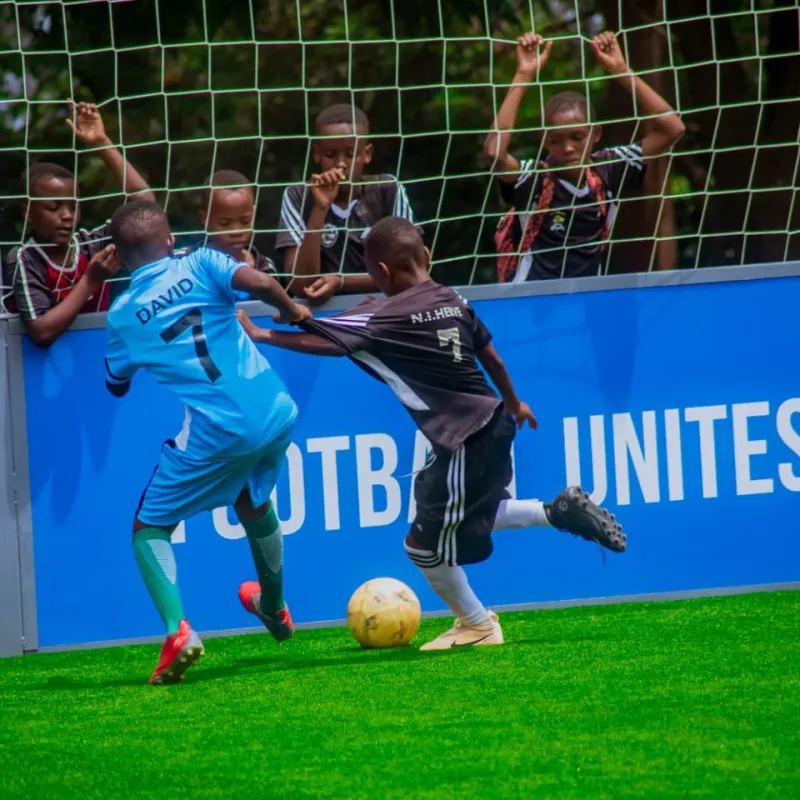
Photo: Nibeza, CC0, via Wikimedia Commons
The Resume Nobody Talks About
Here's something most gamers never brag about on a job application: they've been training for high-pressure environments since they were teenagers. Not in a gym, not in a boardroom — in a headset, staring at a screen, making split-second calls that would send most people into a full spiral.
Ask Marcus, a 29-year-old logistics coordinator from Columbus, Ohio, how he got good at managing competing priorities at work, and he'll pause for a second before laughing. "Honestly? Probably StarCraft," he says. "You're tracking resources, managing units, watching the map, and anticipating what the other side is about to do — all at once. My job feels slower than that on most days."
Marcus isn't alone in making that connection, and increasingly, neither are the people doing the hiring.
What You're Actually Learning When You Think You're Just Playing
The list of skills casual and competitive gamers develop is longer than most people expect — and a lot of it sneaks up on you.
Decision-making under pressure is maybe the most obvious one. Whether you're in the final circle of a battle royale with three bullets left or trying to hold a point in a team-based shooter, gaming trains your brain to evaluate options fast and commit to a choice without perfect information. That's not a gaming skill. That's a leadership skill.
Then there's resource management. Strategy games, RPGs, even survival titles — they all demand that you track what you have, figure out what you need, and make tradeoffs in real time. Sound familiar? It should. That's budgeting. That's project planning. That's the kind of thinking businesses spend thousands of dollars trying to teach through workshops.
Communication is another one that gets overlooked. Coordinating with a five-person squad in a competitive match requires clarity, brevity, and the ability to read the room — or in this case, the lobby. "You learn really fast that yelling into the mic doesn't help anyone," says Priya, a 24-year-old marketing associate from Austin who's been playing team-based games since high school. "You have to be calm, you have to be clear. If you panic, your whole team falls apart."
She says that lesson transferred directly into how she handles client calls at work. "Same energy, honestly."
Employers Are Starting to Pay Attention
For a long time, gaming on a resume was something you quietly left off — or buried at the bottom under "Interests" next to "hiking" and "cooking." But that's starting to shift.
A growing number of companies, particularly in tech, finance, and consulting, have begun factoring in competitive gaming experience when evaluating candidates for roles that demand analytical thinking and fast adaptation. Some talent consultants have even started coaching job seekers to reframe their gaming backgrounds in professional language — not to oversell it, but to accurately represent what they've actually been doing.
And the data is backing this up. Research from institutions including the University of Rochester has found that action video game players develop stronger probabilistic inference skills — essentially, the ability to make good decisions in uncertain conditions. That's not a niche academic finding. That's something every manager wishes their team was better at.
Hiring managers at firms in the Midwest and on the coasts have quietly noted that candidates who can articulate their gaming experience — especially leadership roles like guild management or team captain positions in esports — often demonstrate stronger abstract reasoning and cross-functional communication skills during interviews.
The Genres That Train Different Muscles
Not all games build the same skills, and that's actually part of what makes gaming such a rich training ground.
Real-time strategy games like Age of Empires or StarCraft hammer macro-level planning and resource allocation. You're always thinking several moves ahead while managing what's happening right now.
Multiplayer shooters and MOBAs tend to sharpen situational awareness and team coordination. You learn to process information from multiple sources simultaneously and trust your teammates to hold their lane.
RPGs and open-world adventure games often develop long-term goal setting and patience — the ability to work toward something meaningful without immediate gratification. That's a skill that's genuinely harder to teach than people think.
Even casual puzzle games and mobile titles build something. Pattern recognition. Flexibility. The ability to try something, fail, adjust, and try again without giving up.
The Soft Skill Nobody's Naming Out Loud
There's one more thing gaming builds that rarely makes it into the conversation: resilience.
Every gamer knows what it feels like to fail repeatedly at the same challenge. To get outplayed, outbuilt, or just plain outrun — and keep going anyway. That cycle of failure and persistence, repeated over thousands of hours, quietly rewires how you handle setbacks.
"I don't think I would be as patient as I am if I hadn't spent years playing difficult games," says Jordan, a 31-year-old software developer from Seattle. "You learn that failing isn't the end. It's just data. You figure out what went wrong and you go again."
In a workplace culture that's increasingly focused on adaptability and growth mindset, that's not a small thing. That's exactly the kind of mentality companies spend real money trying to instill through training programs — and gamers are building it for free, one respawn at a time.
Play On, Build On
The next time someone asks what you do for fun and you hesitate before mentioning gaming — don't. You're not just playing. You're practicing. You're problem-solving. You're building a version of yourself that's faster, more adaptable, and more capable of handling chaos than most people who've never picked up a controller.
The world is starting to catch on. Might as well own it.