Playing Alone in a World Built for Everyone: The Quiet Rise of the Solo Gamer
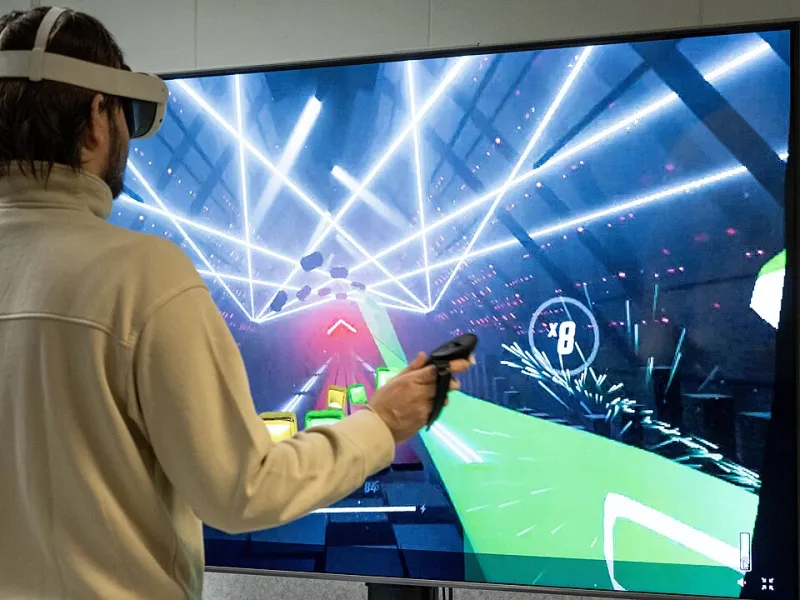
Photo: InclusiveGameLab, CC BY-SA 4.0, via Wikimedia Commons
An Unlikely Kind of Freedom
There's a moment that a lot of gamers know but rarely talk about. You load into a multiplayer lobby, see the party invite notification pop up, and instead of accepting it — you close it. You mute the voice chat. You turn off the social features. And then you just… play.
For some people, that's a temporary thing. For a growing number of players across the US, it's become a deliberate lifestyle choice — and one that's reshaping what the gaming industry thinks its audience actually wants.
The solo player is having a moment. And it's more complicated than it looks.
The Pressure to Always Be On
Gaming culture has spent the better part of a decade pushing connectivity. Guilds, squads, clans, communities — the message has been consistent: the more people you play with, the better the experience. And for a lot of players, that's genuinely true.
But somewhere along the way, the social layer of gaming stopped feeling optional for some players and started feeling like homework.
"I love gaming. I've loved it my whole life," says Danielle, a 27-year-old teacher from Phoenix. "But I got to a point where logging into a multiplayer game felt like showing up to a social obligation. I had to be 'on.' I had to communicate. I had to perform. And after a full day of doing that at work, I just didn't have anything left."
She switched to playing solo modes almost exclusively about two years ago. "I felt guilty about it at first, honestly. Like I was doing something antisocial. But then I realized — I was actually enjoying games again."
Danielle's experience isn't unusual. Gaming researchers and mental health professionals who work with players have noted an uptick in what some are calling "social gaming fatigue" — a kind of burnout that comes not from playing too much, but from the relentless social expectations that now come baked into the experience.
What Solo Play Actually Gives You
Here's the thing about playing alone that doesn't get enough credit: it's not a lesser version of gaming. For a lot of players, it's a richer one.
Without the noise of a squad, you notice the game itself more. The world-building. The music. The story. The details that get drowned out when you're trying to coordinate a raid or keep up with party banter.
"I started actually reading the lore in games I'd played for years," says Trevor, a 34-year-old from Chicago who shifted to solo play during the pandemic and never fully went back. "I'd always rushed through it because other people were waiting on me. When I started playing alone, I slowed down. Games became this whole different thing."
There's also something to be said for the mental health dimension. Therapists who work with young adults have increasingly noted that solo gaming can function as genuine restorative downtime — the kind of low-demand, low-stakes engagement that lets an overstimulated nervous system decompress. It's not avoidance. For many players, it's recovery.
Developers Are Listening — Slowly
The industry has been paying attention, even if it's been a little slow to fully respond.
Several major titles that launched as primarily multiplayer experiences have quietly expanded their single-player content in recent years. Others have built out "solo mode" options that let players experience multiplayer-style gameplay without the social layer — AI teammates, offline modes, or private servers that remove the pressure of performing for a live audience.
The success of deeply solo-focused games — cozy titles, narrative adventures, and slow-burn RPGs — has also sent a clear signal to developers that the appetite for non-social gaming is not only real but commercially significant. Games like Stardew Valley, Hades, and Celeste didn't just find an audience. They found a community of players who specifically wanted to be alone with them.
That's not a contradiction. It's a nuance the industry is still catching up to.
The Paradox at the Heart of It All
Here's where it gets interesting: the rise of solo play isn't really about rejecting community. Most solo players aren't anti-social. They're not disconnected from gaming culture. Many of them follow streamers, engage in forums, read gaming journalism, and care deeply about the communities around their favorite titles.
What they're opting out of is the real-time social performance — the expectation that enjoyment has to be shared, coordinated, and visible to count.
"I follow tons of gaming content. I'm part of Discord servers. I talk about games constantly with people online," says Marisol, a 22-year-old from Miami who describes herself as a committed solo player. "I just don't want to do it inside the game while I'm trying to play. Those feel like two different things to me."
She's not wrong. And that distinction — between being part of a gaming community and being socially active within a game — is one the industry is only beginning to design around intentionally.
Room for Every Kind of Player
What the solo player trend really reflects is something broader about where gaming is right now. The audience has grown up, spread out, and diversified in ways that no single design philosophy can fully serve.
There are players who want the chaos of a full squad. There are players who want a quiet Tuesday night with a good story and no notifications. There are players who want both at different times, depending on how their week went.
The best platforms and the best games are starting to make room for all of them. Not by choosing between social and solo, but by understanding that the line between the two is a lot more personal — and a lot more fluid — than anyone assumed.
Playing alone doesn't mean playing without purpose. Sometimes it means playing with exactly the right amount of it.