Swap the Sweat for Sunsets: How Cozy Games Became America's Favorite Digital Escape
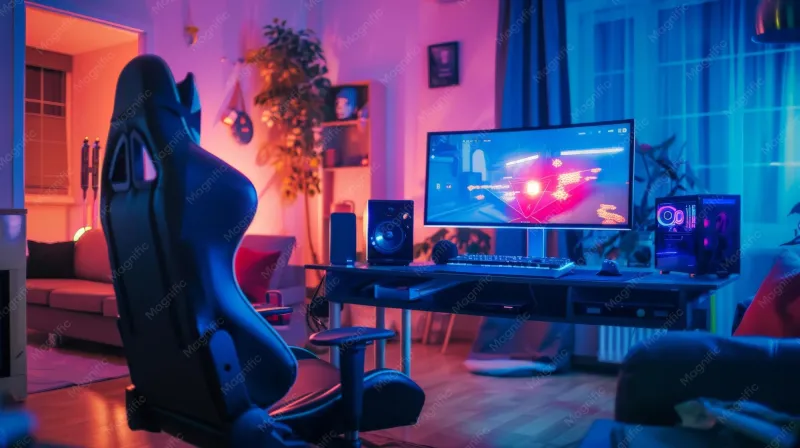
Photo: cozy gaming setup warm lights person relaxing playing video game, via img.freepik.com
There's a moment in Stardew Valley where you plant your first batch of parsnips, water them carefully, and then just... stand there watching the pixelated sun dip below the mountains. No timer. No enemy closing in. No teammate screaming in your headset. Just you, some seeds, and a whole lot of quiet.
For tens of millions of players across the US, that moment felt like a revelation.
Cozy gaming — a loosely defined genre built around low-stakes gameplay, nurturing mechanics, and feel-good aesthetics — has exploded from a niche curiosity into a full-blown cultural movement. And if you've been paying attention to how people are actually spending their leisure hours, you probably saw this coming.
The Numbers Don't Lie
Let's talk scale for a second. Stardew Valley, released back in 2016 by solo developer Eric Barone (better known as ConcernedApe), has sold over 30 million copies worldwide as of 2024. Animal Crossing: New Horizons moved more than 44 million units — making it one of Nintendo's all-time bestsellers. Newer entries like Coral Island, Haunted Chocolatier (still in development and already generating massive buzz), and Unpacking continue to pull in dedicated fanbases.
On streaming platforms, cozy content has carved out a surprisingly dominant space. Channels dedicated exclusively to slow-paced, low-conflict gameplay regularly rack up hundreds of thousands of views. The hashtag #cozygaming has over a billion impressions across social media platforms. This isn't a passing trend — it's a full genre realignment.
Why Now? The Stress Factor
Here's the honest truth: competitive gaming is exhausting. Anyone who's spent an afternoon grinding ranked matches in a popular shooter or MOBA knows the emotional toll. The wins feel great, sure. But the losses, the toxicity, the constant pressure to improve — it adds up. For a lot of players, gaming stopped feeling like fun and started feeling like a second job.
Psychologists have taken notice. Dr. Rachel Kowert, a research psychologist who has studied gaming's effects on mental health extensively, has pointed out that games offering what she calls "low-arousal positive experiences" — think gentle music, predictable reward loops, and non-threatening environments — can genuinely help players decompress after stressful days. The brain, it turns out, doesn't always want a challenge. Sometimes it just wants a fishing rod and a warm afternoon.
Add in the backdrop of recent years — a global pandemic, economic uncertainty, relentless news cycles — and it makes complete sense that people are gravitating toward digital spaces that feel safe. A farm sim where the worst thing that can happen is a bad harvest? That's not escapism. That's self-care with a controller.
Community Is the Secret Ingredient
What makes cozy games stickier than just "easy games" is the community layer wrapped around them. Animal Crossing players traded turnip prices and island designs like a social currency during the pandemic lockdowns. Stardew Valley has an incredibly active modding community that keeps the game fresh years after its initial release. Discord servers, Reddit threads, and fan wikis devoted to these titles buzz with the kind of warm, welcoming energy that's genuinely rare in gaming spaces.
That community dynamic is something developers in the cozy space talk about intentionally designing for. The goal isn't just to make a relaxing game — it's to make a game that gives players something to share. A screenshot-worthy moment. A funny crop failure. A character interaction that hits unexpectedly hard. These games generate stories, and stories bring people together.
It's the same philosophy that drives what we're building here at Squeen Play. Gaming, at its best, isn't about domination — it's about connection. Whether you're comparing high scores, swapping tips, or just hanging out in a shared digital space, the point is the people, not the pressure.
The Developers Building the Vibe
One of the most interesting things about the cozy game boom is that it's largely been driven by small studios and independent developers, not the massive publishers chasing the next billion-dollar franchise. Teams of two, five, ten people are building some of the most-played games in America right now.
That scrappiness shows in the products themselves. Cozy games tend to feel personal — like someone poured genuine affection into every corner of the world. The music in Stardew was composed entirely by Barone himself. The character writing in games like Coffee Talk carries a warmth that no focus group could manufacture. Players sense that care, and they respond to it.
For the growing ecosystem of indie developers in this space, the message from the market is loud and clear: people are hungry for experiences that respect their time and their mental bandwidth. You don't have to build the next Call of Duty to build something meaningful.
What This Means for How We Play Together
The rise of cozy gaming is reshaping expectations across the entire industry. Major publishers are taking note — even franchises traditionally associated with action and intensity are introducing low-stakes modes, gentler progression systems, and more narrative-driven content. The player base has spoken, and it wants options.
For casual gaming platforms like Squeen Play, this shift is genuinely exciting. The players showing up for cozy experiences aren't looking to prove anything. They want to have a good time, maybe meet some cool people, and walk away feeling better than when they logged in. That's not a small ask — that's actually the whole point of play.
So whether you're tending a virtual garden, decorating a digital home, or just vibing to a lo-fi soundtrack while your in-game character fishes, know this: you're part of something much bigger than a genre trend. You're part of a generation of players reclaiming what games were always supposed to be — fun, low-pressure, and genuinely worth your time.
Game on. Just maybe at a slightly slower pace.